
About Melanoma
Melanoma is not only the most deadly type of cancer of the skin but also the hardest to detect, however if it is recognised and treated early, it is nearly 100% curable. If not, the cancer can advance and spread to other parts of the body where it becomes hard to treat and can be fatal.
Melanoma: A serious but largely preventable cancer
Melanoma may be less common than other skin cancers, but it is significantly more dangerous if not detected early.
Incidence
- Melanoma is the fifth most common cancer in the UK.
- In 2024, there were a record 20,800 new melanoma cases, up from an annual average of 19,300 between 2020 and 2022.
- Over the past decade, melanoma incidence rates have increased by nearly a third (31%) in the UK.
- Projections suggest that melanoma cases will continue to rise, reaching approximately 26,500 annually by 2038–2040.
Mortality
- Melanoma causes around 2,300 deaths each year in the UK, averaging more than six deaths per day.
- It is the 20th most common cause of cancer death in the UK.
- Projections indicate that annual deaths from melanoma will rise to approximately 2,800 by 2038–2040, despite a projected 12% decrease in mortality rates.
Prevention
- Approximately 86% of melanoma cases in the UK are preventable.
- Despite increased awareness of the link between sun exposure and skin cancer, incidence rates are expected to continue rising, underscoring the need for ongoing public education on sun safety.
These statistics highlight the critical importance of early detection and proactive prevention strategies in combating melanoma.
The seven point checklist for suspected melanoma
Major signs
Growth
If an existing mole gets larger or a new one is growing.
Shape
If the mole has an irregular outline.
Colour
If the colours are mixed shades of brown or black.
Minor signs
Size
If the mole is bigger than the blunt end of a pencil.
Edges
If it is inflamed or has a reddish edge.
Condition
If it is bleeding, oozing or crusting.
Sensitivity
If it starts to feel different: for example, itching or painful.
Predispositions
Naevi (Larger/irregular moles)
People with a strong family history of melanoma or who have a high number of large moles are at very high risk. Fortunately, very few people fall into this category. Large numbers of benign and dysplastic naevi are highly significant risk factors, with risk directly proportional to the number of naevi.
Skin type
Six skin types have been identified according to the ability of the skin to tan. People with skin types 1 and 2 are at greatest risk of developing malignant Melanoma, whereas people with naturally occurring brown or black skin have a much lower risk as the presence of high amounts of melanin in their skin acts as a shield, blocking the transmission of UV radiation.

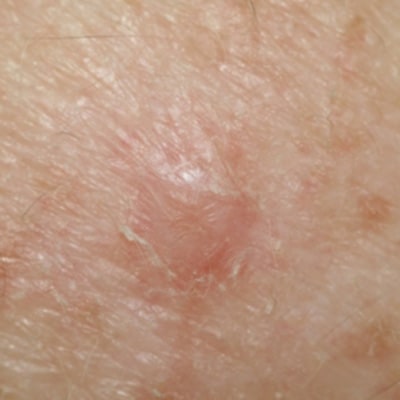

Amelanotic melanoma
It is worth mentioning that, although rare, there are certain melanomas that may have no colour at all. These are referred to as ‘amelanotic’ melanomas, because they are conspicuously missing melanin; the dark pigment that gives most moles and melanomas their colour.
These unpigmented melanomas may be pinkish-looking, reddish, purple, normal skin colour or essentially clear and colourless.
Because it also shows no or little pigment, an amelanotic melanoma can be easily missed, even by experts. Further to this, presentation by patients and diagnosis by doctors and specialists is frequently delayed. Our advice is that apart from the typical changes usually associated with melanoma, any recent or odd looking skin lesions need to be checked out as soon as possible.
Sunburn and Melanoma
Although you don’t have to burn to contract melanoma, there is increasing evidence that excessive sun exposure, and particularly sunburn, when aged under 15 is a major risk factor for skin cancer in later life.
Protection of the skin of children and adolescents is therefore particularly important. Because of this, sunburn should be avoided by individuals of ALL ages.
Cause
All cancers are caused by damage to the DNA inside cells. This can be inherited in the form of genetic mutations, but most commonly, it builds up over a lifetime and is caused by environmental influences. DNA damage causes the cell to grow out of control, leading to a tumor. Melanoma is usually caused by damage from UV light from the sun, however sunbeds can also be a determining factor.

Make a Donation
Our work is focused on raising awareness of melanoma and other forms of skin cancer, all undertaken by a small, but focused team. Today is a tough environment for all charities, especially for smaller organisations like ourselves who depend on donations to survive. All support is greatly appreciated.